Showing posts with label Civil War. Show all posts

Saturday, October 14, 2023

A Southeastern Kentucky backwoods cemetery, a Civil War Mystery Story of Robert Green

Several years ago, a trip to an abandoned cemetery in southeast Kentucky led me to a small project to learn more about a young man remembered on a headstone in this seemingly forgotten place.  My niece and I visited this cemetery to locate the grave of my 5th great-grandfather, Lewis Green, a Revolutionary War veteran.  His marker was easy to identify, slightly outside the cemetery's perimeter.  

                                                      Lewis Green Marker, courtesy of the author

It was high summer, hot and humid as blazes.  Anyone who has hiked in southeastern Kentucky knows how overgrown the area is.  We could not explore deeply into the cemetery.  However, our small search outside the cemetery boundaries was enough to give me a case of poison ivy.


                                                Kirby Cemetery, Bell County, Kentucky, courtesy of the author


We photographed several graves, but I did not look at the photographs until I returned home.  Eventually, I examined all of them and was excited to find one that, with further research, might have a story associated with it.  The stone was of a soldier who died during the Civil War.


                                                                    Grave of Robert Green, courtesy of the author

Private Robert Green, CO K, 64th NC INF was a Confederate soldier.  The headstone says, "BURIED AT OAKWOOD CEM. CHICAGO IL." This inscription is what piqued my interest.  Why would a Civil War soldier who died in 1864 be buried in Chicago?  A little research led me to a story from the war that I had not previously known.

Robert appeared to be a Confederate soldier or a Confederate irregular, though many of his family members became Union soldiers.  Whether Robert was part of the 64th North Carolina or whether he simply attached himself to this unit while they were attempting to hold the Cumberland Gap is unclear.  Though the battle was bloodless, over 2000 Confederate troops ultimately surrendered to the Union army between the 7th and 9th of September 1863.  Some Confederate soldiers escaped, but Union soldiers took Robert and 287 fellow soldiers to Camp Douglas, a notorious Union prisoner-of-war camp on par with the Confederate prisoner-of-war camp, Andersonville.  Officers who were captured were taken to Camp Johnson in Ohio.

       General Ambrose Burnside's Union Forces Passing Through the Cumberland Gap, September 1863, public domain

Thousands of prisoners brought to this Chicago camp never went home.  Records show that one in seven prisoners died at Camp Douglas.  When they died, they were interred in two small cemeteries on the grounds of Camp Douglas, along the shore of Lake Michigan, in what was later called the City Cemetery.  

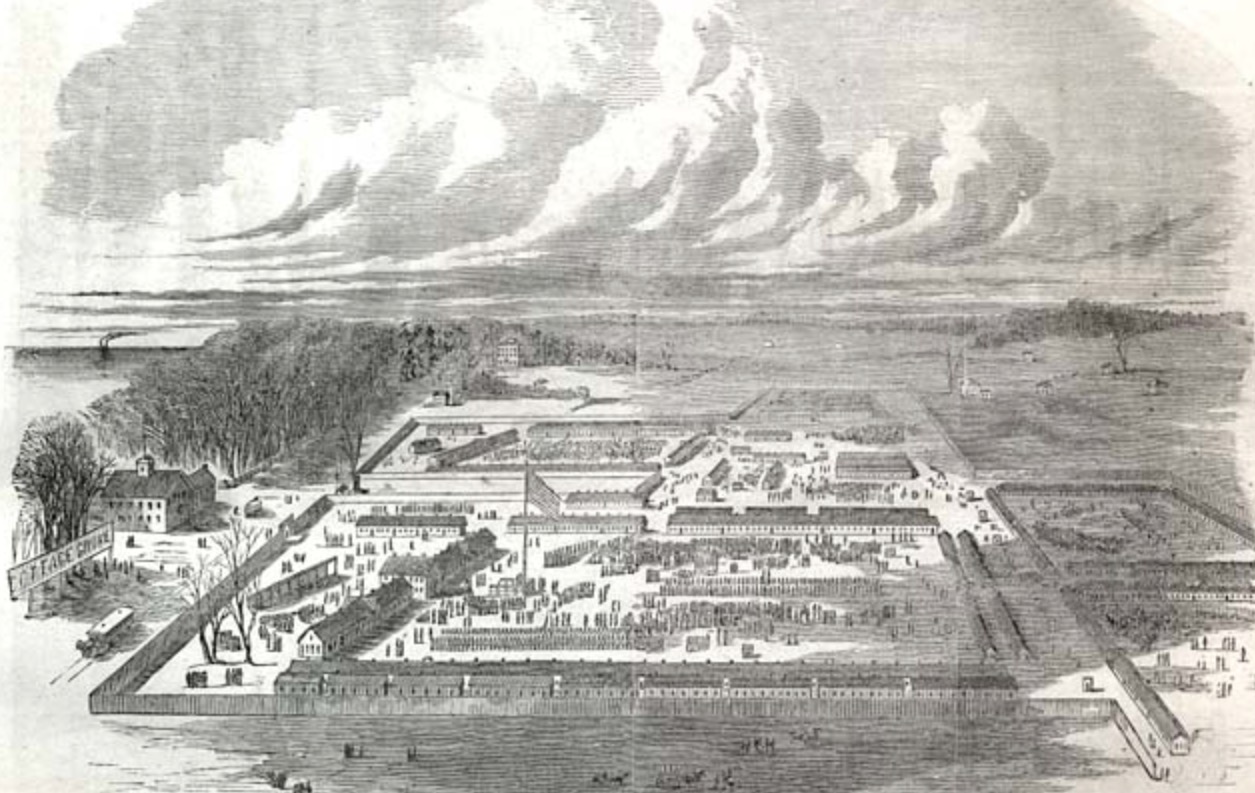
                                          Camp Douglas, Chicago, Illinois, public Wikimedia Commons

                                                            Camp Douglas Prisoners, 1863, Wikimedia Commons

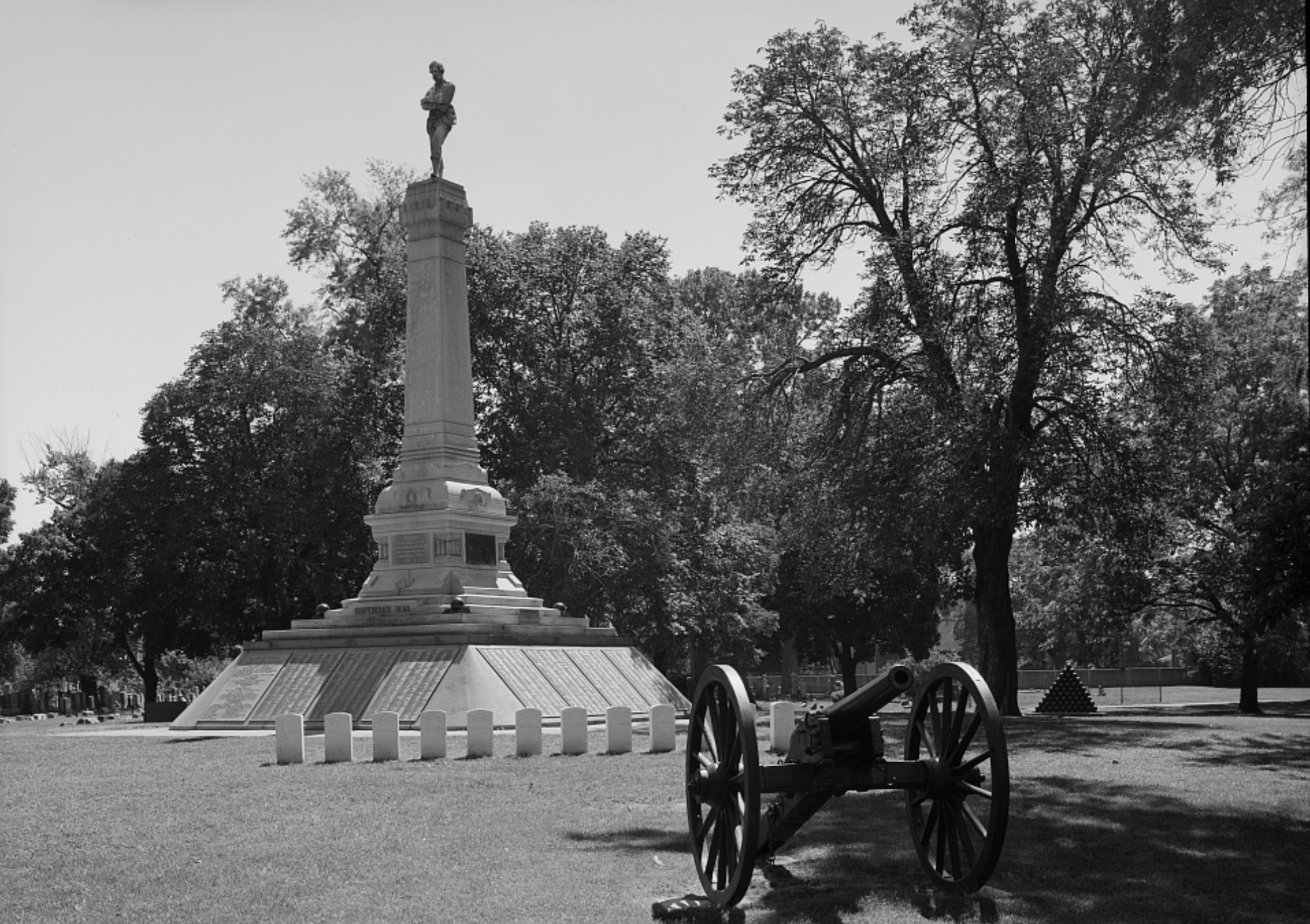
Flooding caused the removal of some of the later burials.  Eventually, workers moved all the burials to a mass grave in the Confederate Mound section of the Oak Woods Cemetery.  General John C. Underwood, regional head of the United Confederate Veterans, dedicated a monument of a Confederate soldier in this section of the cemetery on May 30th, 1895.  Ten thousand members of the public and President Grover Cleveland attended the ceremonies.  In 1911, the Commission for Marking the Graves of Confederate Dead raised the monument above ground level and added the names of the Confederate dead, including Robert Green's.  

                                 Confederate Mound, Oakwood Cemetery, Chicago, Illinois, public domain

Robert died of dysentery in the camp at age 28, one year after the date of his capture.  Robert left a wife and several children behind in the hills of Kentucky, just a few miles from where the Battle of Cumberland Gap occurred.   His wife applied for a pension in 1916.  The information collected by the Adjutant General did not show Robert on any muster rolls, nor did he find any enlistment record.  His wife, Matilda, may not have received any pension for Robert's service.  Robert is my 1st cousin, four times removed, and is the grandson of Lewis Green.


   Matilda Jackson Green's Pension Request, Family Search


Letter in Response to Pension Request, collection of Nathan Long


Thank you to Nathan Long, who corrected some errors in this blog and shared some of his extensive knowledge with me.


Monday, October 2, 2023

My Ohio Putman Family's Contribution to the Union During the Civil War


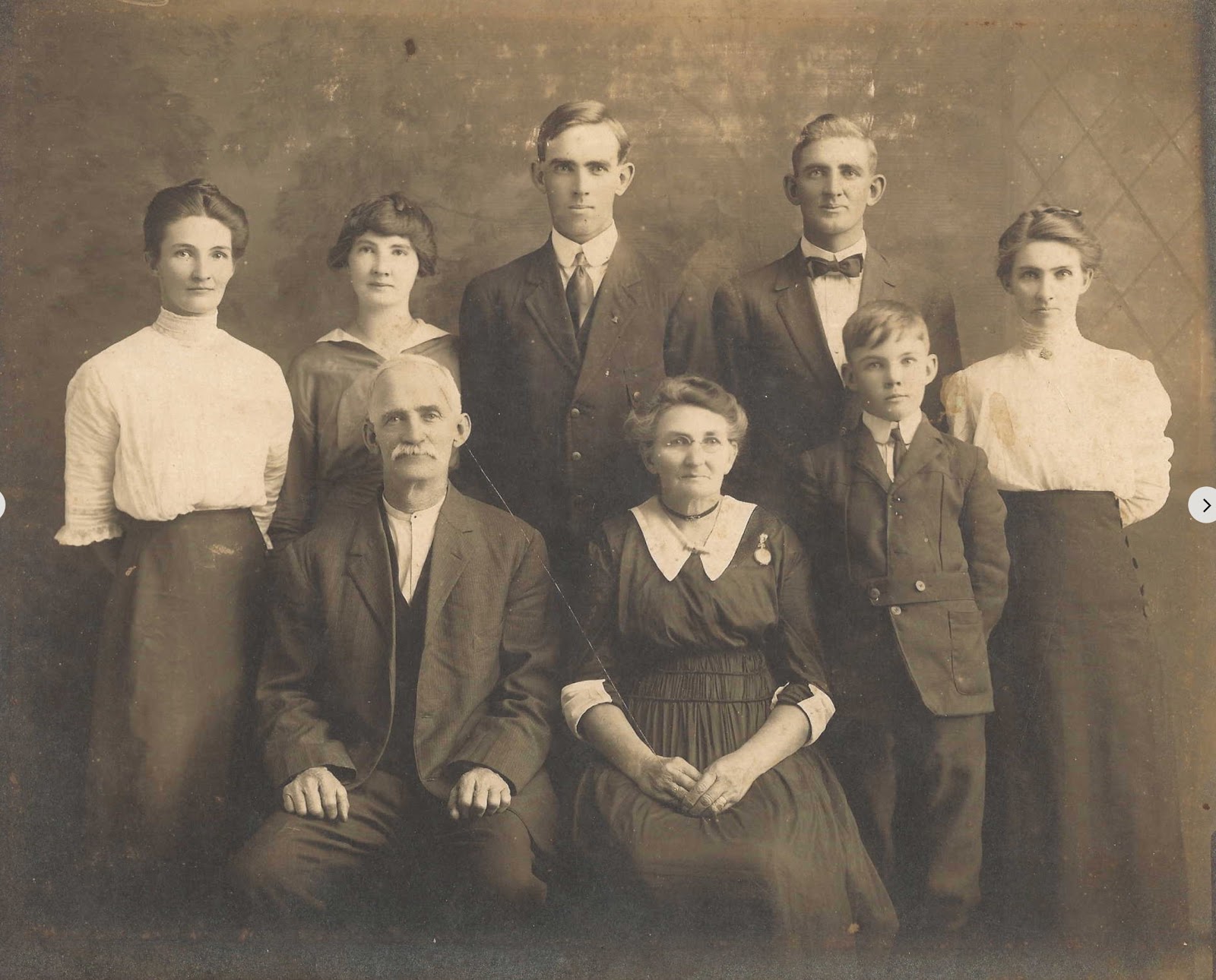
George W. Putman and family, circa 1914-1918, courtesy of the Wendy Allen

My great-grandfather, George W. Putman, was a Civil War veteran.  He had one sister, Mary, and two brothers, Horace and Thomas.  George and both brothers all served in the Civil War.  I can't imagine the family's anguish as their sons went off to fight in that very bloody war.  All three brothers served in the 58th Ohio Infantry, Company I. Mary's husband Samuel also served in the Civil War in a different unit.


The men of the 58th Ohio Infantry saw service in many bloody conflicts, including the battles at Shilo, Chickasaw Bayou, and Chickasaw Gorge.  The unit was involved in other combat, including the Siege of Vicksburg.  Many soldiers from the 58th acted as provosts for two years in Vicksburg after its fall. 


George and Horace mustered out at Vicksburg, Mississippi, near the war's end. Horace left Vicksburg when the unit disbanded on January 14th, 1865.  He had served three years, two months, and 23 days.  George stayed in Vicksburg, finally heading home on September 16th, 1865, a few months after the war's end.  George and Horace moved to southeastern Nebraska, both raising large families there.  


George's Headstone and GAR Marker, Find a Grave, courtesy of Vicky Wiemer


Thomas was not so lucky.  He was wounded at the Battle of Shilo, along with 42 of his comrades.  He survived the battle only to die on July 18th, 1863, aboard the gunboat Lindon while performing patrols along the Mississippi.  The gunboat had six twenty-four-pound howitzer guns.  As a crew member and soldier on the Linden, he participated in several missions that contributed to Vicksburg's capture.  Shortly after the fall of Vicksburg, when Thomas died, the Linden was performing convoy and reconnaissance duties along the Mississippi.  The Lindon survived various mishaps, finally hitting a snag in the Arkansas River in February 1864.  The crew could not refloat it.  After stripping the vessel of all weaponry and valuable supplies, they abandoned it later that year.


USS Linden ("Tinclad" No 10) at mooring, courtesy of Wilson's Creek National Battlefield


The regiment itself lost a total of 305 men.  Three officers and 85 enlisted men were killed, while two officers and 215 enlisted men died of disease.  Records indicate that Thomas was one of those men who died due to disease.


Originally published in Generations, a newsletter of the Southwest Colorado Genealogical Society.


Tuesday, September 26, 2023

A 19th Century American Railroading Story from New Hampshire to Kentucky, train engineer William "Paps: Russell

"Pap" Russell was a railroad man" seems like a fitting epitaph for William Hall Russell, my 2nd great-grandfather.   But it took a lifetime of work to gain that title.


                                                        Train Engineer Paps Russell, courtesy of Wendy Allen

Since the 1730s, William's ancestors lived near Brookline, New Hampshire.  His parents, Campbell Russell, and Lucretia Melvin, married in 1819 and resided near Brookline's forests.  William was born in 1835, the last of the nine children born to the couple.  His father died when he was three.  Life became very difficult for his family.  While Campbell was alive, they cut trees, made charcoal, and sent it to the forges in North Chelmsford.  They also farmed part of their land, which continued after his father's death.  


In 1848, the family moved to Nashua, New Hampshire, believing they could find factory work.  William worked in a cotton mill for a year.  He did not like working indoors, so he left, looking for a job that allowed him to be outdoors.  He spent a year as a peddler carrying his wares in trunks strapped to his back.


                                        Young Doffers in the Elk Cotton Mills, courtesy of the Jewish Museum

When William was sixteen, he made a choice that would change the course of his life.  He started work as a section man for the old Fitchburg Railroad near his home in Nashua.  When fall came, the railroad paid him to watch the engine for the winter.  Perhaps that cold, lonely winter with the train helped him decide what he wanted for his future.


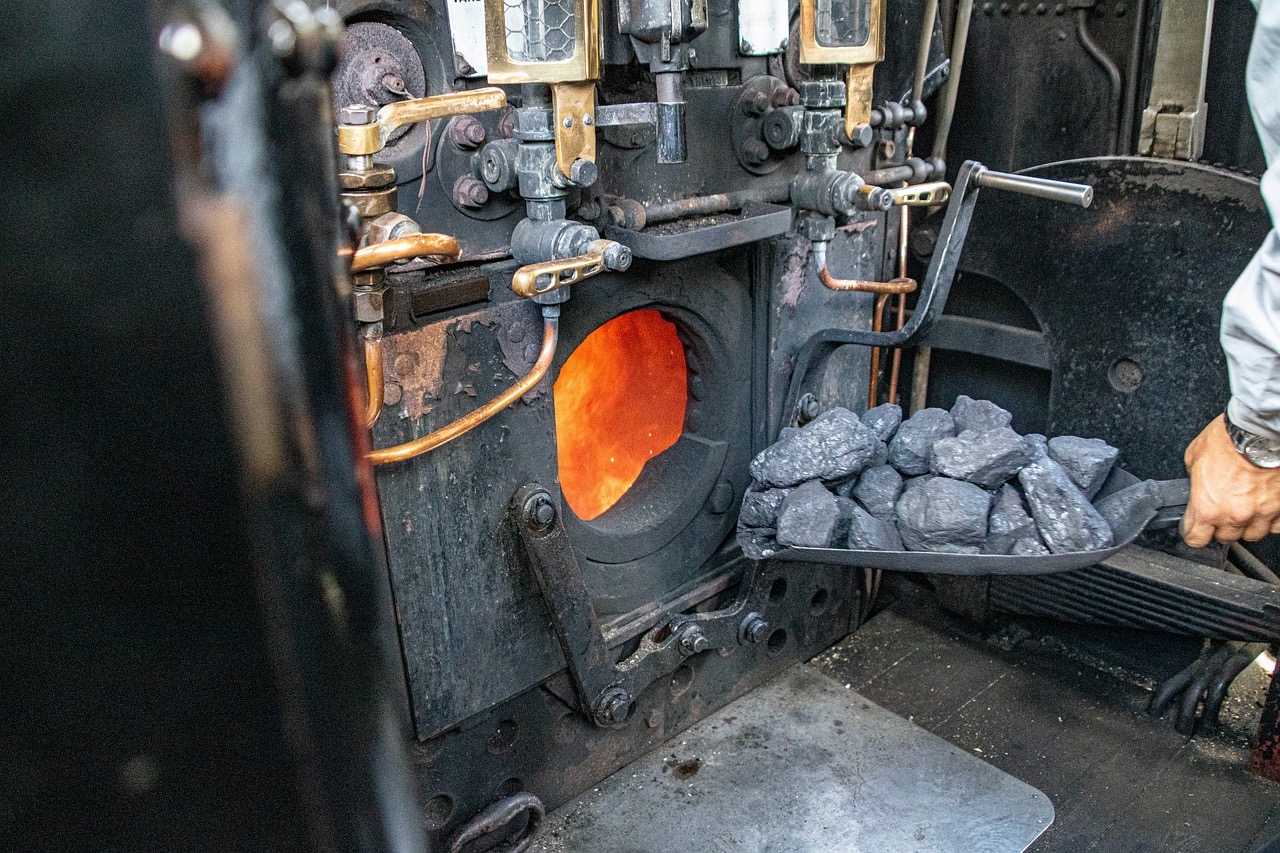
In 1852, when he was seventeen, he moved from New Hampshire to Ohio to continue his railroad work.  He laid tracks from Springfield to London, Xenia to Dayton, and Springfield to Delaware.  When he completed his work on these routes, he became a fireman on one of the trains.  Firemen tended and maintained the fire that kept the engine running and many other tasks that ensured the engine kept running efficiently.  It was a hard, dirty job.  He was allowed to fill in for a vacationing engineer.  When the engineer returned, he returned to the hard labor of shoveling coal for the engine.  But by the following year, he was again an engineer on the train.


                                            Shoveling coal into the engine's firebox, courtesy of Erik Lyngsoe

He married my second great-grandmother Sarah Elizabeth Butts in 1854.  They would have three children, including my great-grandmother Mary "Birdie." By 1856, he moved to Nashville, Tennessee, and found low-paying work at a railroad standstill, eventually moving to work as a railroad switch installer.  From a letter of recommendation, we know he ultimately worked as an engineer in the Nashville area for several years leading up to the Civil War.  

Control of the Louisville & Nashville railroad was essential to winning the war.  The military used the railroad for carrying supplies and sometimes troops.  Fighting happened up and down the rails.  While the war raged on, both armies destroyed and rebuilt the tracks numerous times.  After the Battle of Nashville, city leaders evacuated the city, and the railroad fell under the command of the Union.  William decided he did not want to move his family south and kept them in Nashville. 


                                                   Louisville & Nashville Rail Map, Wikimedia
 

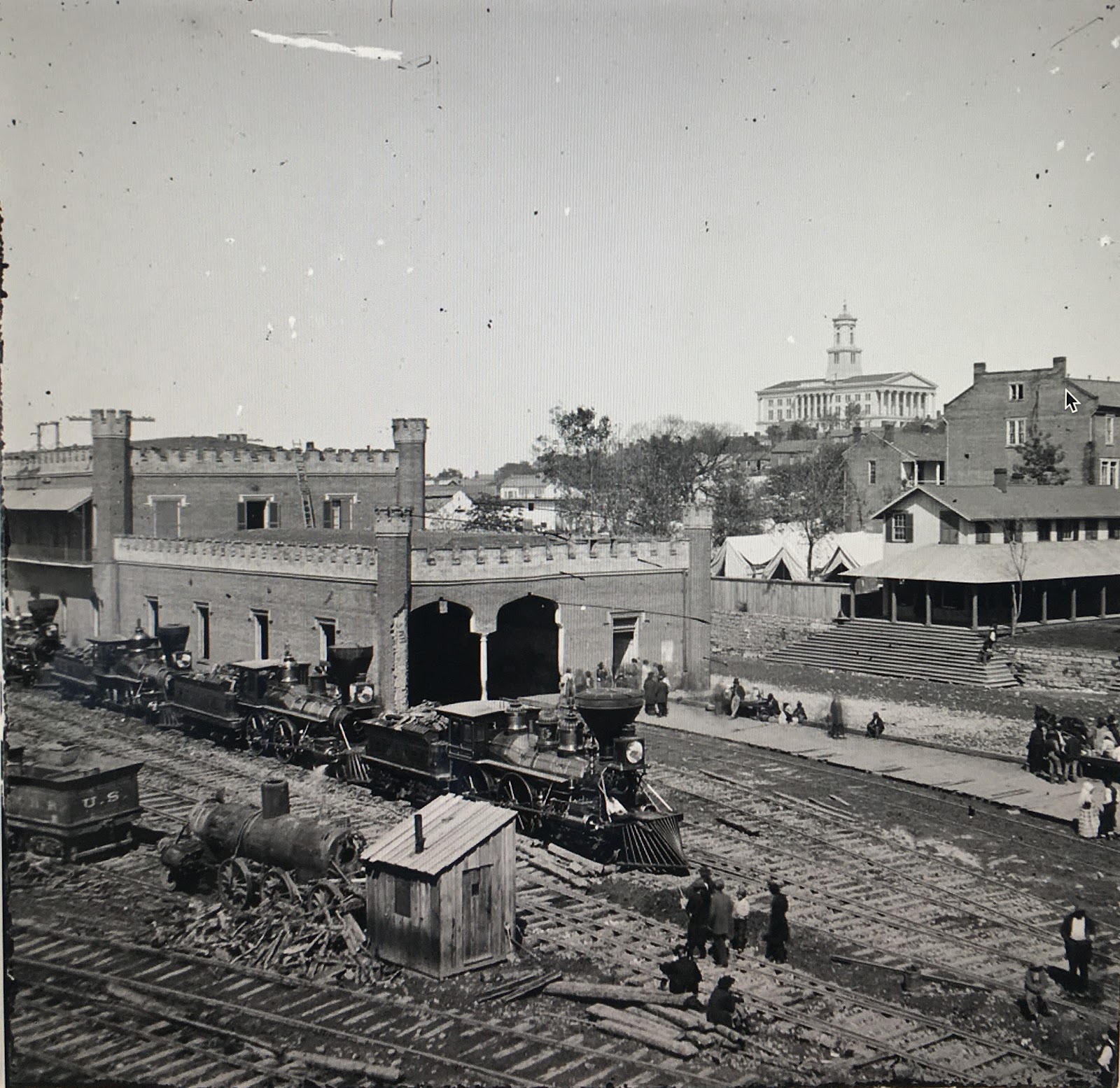
When the federal army came into Nashville, he met an old friend from a previous job, John B. Anderson.  Mr. Anderson was now the Superintendent of the Military railroad division in the Nashville area.  Mr. Anderson gave William the job of setting up and running the first engine sent in by the government.  He ran the engine, Little Jupiter, until the Union returned the line to the company at the war's end.  He continued to work for the government after the war in railroad procurement.  He was also known as a master railroad mechanic.


                    Nashville, Tenn. railroad yard and depot with locomotives at the time of the Battle of Nashville, public domain


                                                                    Nashville, Tenn. railroad yard, public domain

Eventually, he moved to Kentucky, where he would finish off his forty-four-year career with the railroad, forty years spent as an engineer.  His wife, Sarah, died in 1888.  In 1890, he returned to New England to marry his cousin, Sarah Russell.  She would raise my great-grandmother, Birdie, in Louisville and Bowling Green, Kentucky.  William died in Kentucky in 1901.


                                                            Obituary of William Hall Russell, Newspapers.com

Both of Russell's sons became railroad men.  On the 1880 US Federal Census, his 20-year-old son, C.W. Russell, was listed as a railroad fireman.  His brother, Thomas, was listed as a train engineer on the 1900 and 1910 census.  Thomas was a 35-year member of the Brotherhood of Locomotive Engineers at his death.


I have found many newspaper articles about William and his work with the railroad.  One was an extensive article about his life; the others were short, descriptive vignettes.  These articles supplemented census and town records, giving a much fuller view of the life of William "Pap" Russell.


Two of my favorite short articles give insight into Williams's work and life.  The first describes:  


"This old veteran, who is now on the Elkton & 

Clarksville run, while on duty never sits down,

but in a standing position, ever on the lookout 

for an open switch or an obstacle on the road.  

He claims that an engineer is more apt to 

forget his duty when sitting down, and that many 

of the accidents are caused by the engineer 

sleeping while on duty."


The second tells a harrowing tale:


"Pap" Russell, one of the oldest locomotive engineers 

in the employ of the L.&N., was struck by his own 

engine in the Guthrie yards Saturday night and it 

was at first thought he had been fatally injured.  He 

had just had supper and coming out of the hotel undertook 

to cross the track in front of the engine, which was in the 

charge of his fireman.  The locomotive knocked him down 

and when picked up was unconscious condition.  He was taken

to the hotel and Dr. Marshall was immediately summoned. 

An examination showed no bones were broken, but 

the shock had paralyzed the old man and it was 

about two hours before he showed signs of relief."


"Locomotive Blasts" The Bee (Earlington, Kentucky), 23 November 1893, p. 3, col.  4;  digital images Newspapers (https://www.newspapers.com/image/145526788/?terms=Paps%20Russell&match=1 : accessed 2 August 2021)


"Struck by His Own Engine." Hopkinsville Kentuckian (Hopkinsville, Kentucky), 19 June 1895,  p. 1, col.  3; digital images Newspapers (https://www.newspapers.com/image/68182254/?terms=Paps%20Russell&match=1 : Accessed 2 August 2021)


Tuesday, February 13, 2018

The Missing Southeastern Kentucky Census Reports, what happened to James Noah Miller?

1840 Harlan County, Kentucky Census


The idea of using the census as part of my research keeps taking me to the census records I can’t find for some of my Kentucky kin.  It’s not the ones I have.  It’s the ones I don’t have.  Census records contain a wealth of information, so not having them can create mysteries that seem unsolvable.
My 2nd great-grandfather James Miller and a woman and child to be the correct ages of my second great-grandmother Lucretia Bingham and their daughter Sarah are found on the 1840 census in Harlan, Kentucky.  James and his family lived next door to Noah Hendrickson, his brother-in-law.  James drops off the face of the earth after that.  He never shows up on another census with or without Lucretia.  Lucretia is traceable until she died in 1904.
1850 Harlan County, Kentucky Census
The 1850 census shows Lucretia with her three children in the household of her sister and brother-in-law, Noah Hendrickson, in Harlan, Kentucky.  This is probably the same location but without James in the area.  The 1860 census is missing for the entire family.  On the 1870 census, she is in Knox County, Kentucky, with three children.  Lucretia and an adult child and a grandchild show up on the 1880 census for Knox County, Kentucky.  These would now be located in modern Bell County.  I have yet to find another census showing James Miller.  The death certificate of James’ youngest daughter, born about 1863, shows James as her father.  My great-grandmother, his middle child,  listed James Miller as her father.
Where is James on any census after 1840?  James lived at least until 1862, possibly fathering all five of Lucretia’s children.  There are stories of Civil War involvement and James possibly being shot by his own men as he ran out the back door at his brother-in-law, Noah’s house.  But he is missing from the 1850 and the 1860 censuses.
Where was Lucretia on the 1860 census?  Family stories told of Lucretia working for “toting” privileges around the time of the 1850 census.  This means she worked in someone’s household and took home any leftover food for her family.  She was destitute, with no husband to help support the family.  These missing census results continue to fuel the Miller family mystery.
Burying grounds for Lucretia, her sister, and Noah Hendrickson.
 The daffodils mark their graves.