Showing posts with label Studebaker. Show all posts

Friday, October 27, 2023

Ohio County Agent Becomes a Naval Officer on a Liberty Ship During WW II


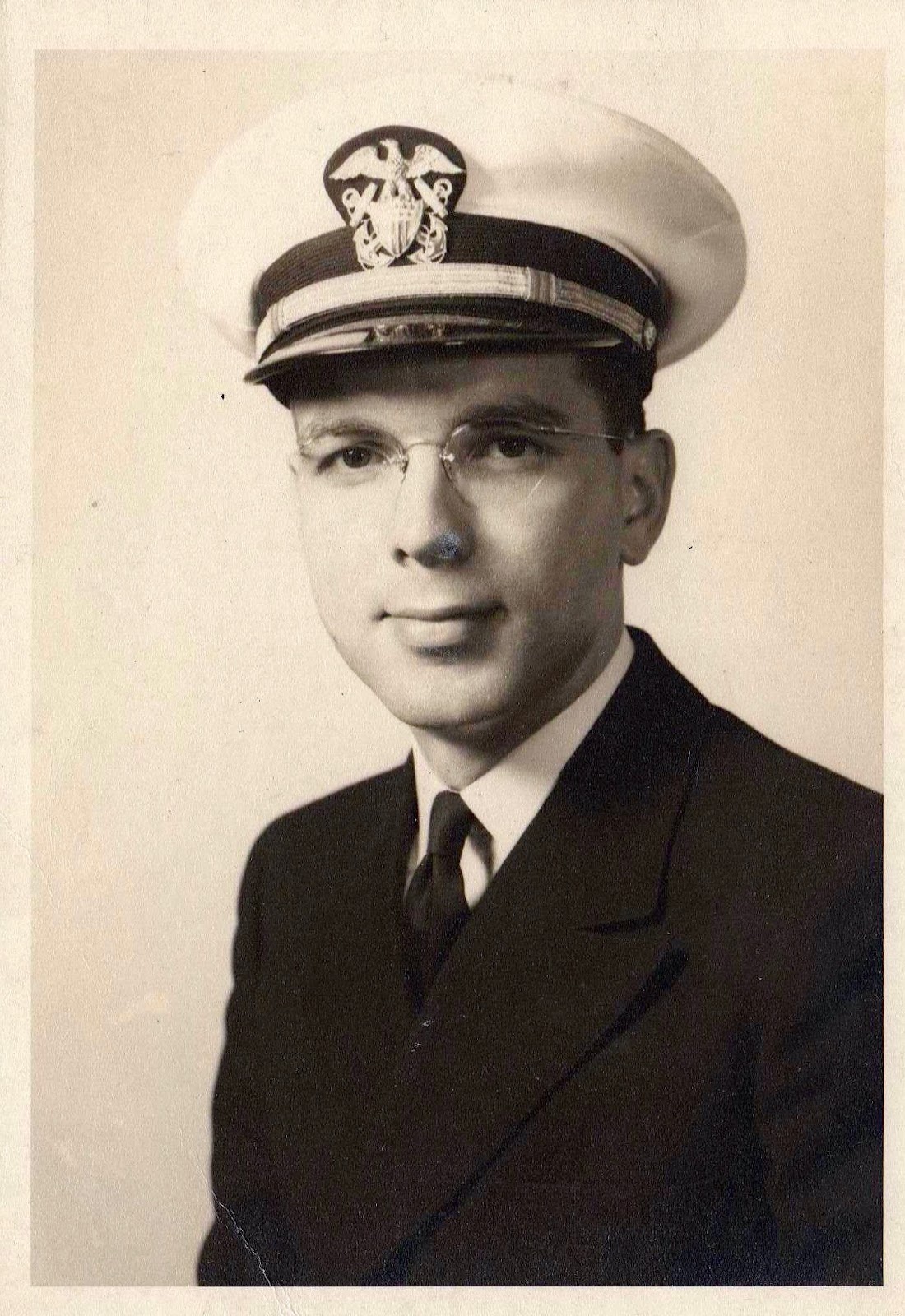
                                                                Eldon F. Studebaker, courtesy of Stephen Studebaker

Eldon E. Studebaker, a young Church of the Brethren member, watched as his friends signed up to fight in WWII.  The members of this church had a long history of being pacifists, but for some, this war was different.  After what I am sure was a great deal of soul searching, Eldon signed up for the Navy in May 1944.  He had completed his education in agriculture at Manchester College and Ohio State University.   Because he already had a degree, the military sent him to Princeton and later to the Armed Guard Training School in Norfolk, Virginia, for further training.  His college education and military training allowed him to obtain the rank of Ensign quickly.

Newspapers.com, The Journal Herald, Dayton, Ohio, 4 Mar 1945, Page 10

The Navy assigned him to the liberty ship, S.S. Harold T. Andrews.  He commanded a twenty-four-man armed guard aboard the Andrews, where most of the crew were civilians.  Liberty ships served various purposes in the war, including carrying food, fuel, vehicles, and aircraft.  Some were used as troop carriers or for transporting prisoners of war.  The Navy used some of these vessels as hospital ships.  Eldon’s ship was carrying Coca-Cola syrup, uniforms, and Studebaker trucks.


                             Liberty Ship Harold T. Andrews, photo taken by Eldon F. Studebaker, courtesy of Stephen Studebaker


Their ship left Rhode Island and crossed to the Pacific through the Panama Canal, heading for Manu, just north of Papua, New Guinea.  Manu had been a hotly contested island, finally liberated from the Japanese by the Americans and Australians in February 1944.  The island was significant to the United States because they used it as a supply hub for shipping items to many other conflict areas.


Map of Manu and  Seeadler Bay, Wikipedia

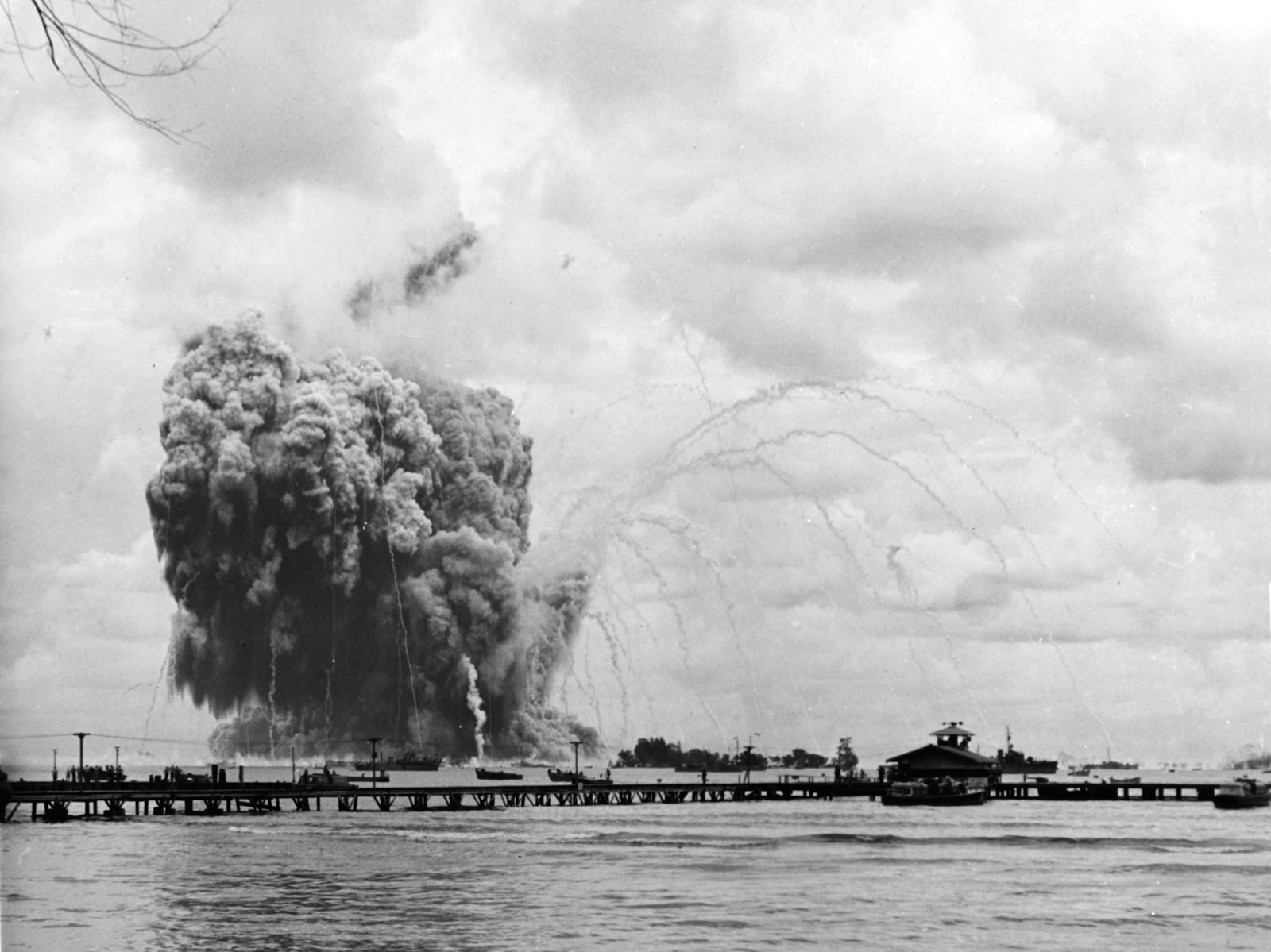
After a harrowing journey across the Pacific, Eldon arrived at what he called Manu Bay (probably Seeadler Harbor) in Dec 1944.  He photographed his ship in the harbor on December 25, 1944.  Luckily, he avoided the terrible explosion of the U.S.S. Mt. Hood one month earlier in the same harbor.  The Mt. Hood carried ammunition when she went up, killing many sailors on board and sinking seven smaller nearby vessels.

                                                                The Explosion of the U.S.S. Mt Hood, Wikimedia

The days must have seemed long for the men who spent weeks at sea.  Many of the men gambled, but Eldon did not join in.  He noted that when the ship got to Manu, a couple of the card sharks had the rest of the crew’s money.  Eldon spent time reading his prayer book, keeping a journal, and making sketches in the margins of the small book.  He wrote many letters home to his beloved Ruthy and his small daughter Nancy.  Eldon was a farm boy, learning to carve with a pocket knife as a child.  While at sea, he carved things that he saw, including a native outrigger he had photographed from the deck of his ship.  This treasure is in the collection of his son Stephen, who was born during the war.


Photo of an Outrigger Canoe by Eldon F. Studebaker, courtesy of Stephen Studebaker

Back of the Outrigger Canoe photo, courtesy of the author

               Carvin g of an Outrigger Canoe carved by Eldon F. Studebaker, courtesy of the author


Originally published in Generations, the newsletter of the Southwest Colorado Genealogical Society.


Tuesday, June 13, 2023

Wheelbarrow Johnny, A Gold Rush Tale

                                                                    Blacksmith's Shop, Public Domain

John Mohler Studebaker was born in 1833 in Adams County, Pennsylvania.  As a young boy, he moved with his family to Ohio.  An 1850 Federal Census for Montgomery Township, Ashland County, Ohio, shows a 16-year-old boy named Mohler in the household of John Studebaker.  John, 51, and Henry, 23 (same family) both list their occupations as blacksmiths, while Mohler is listed as a laborer.


                                                    1850 US Federal Census for John Mohler Studebaker


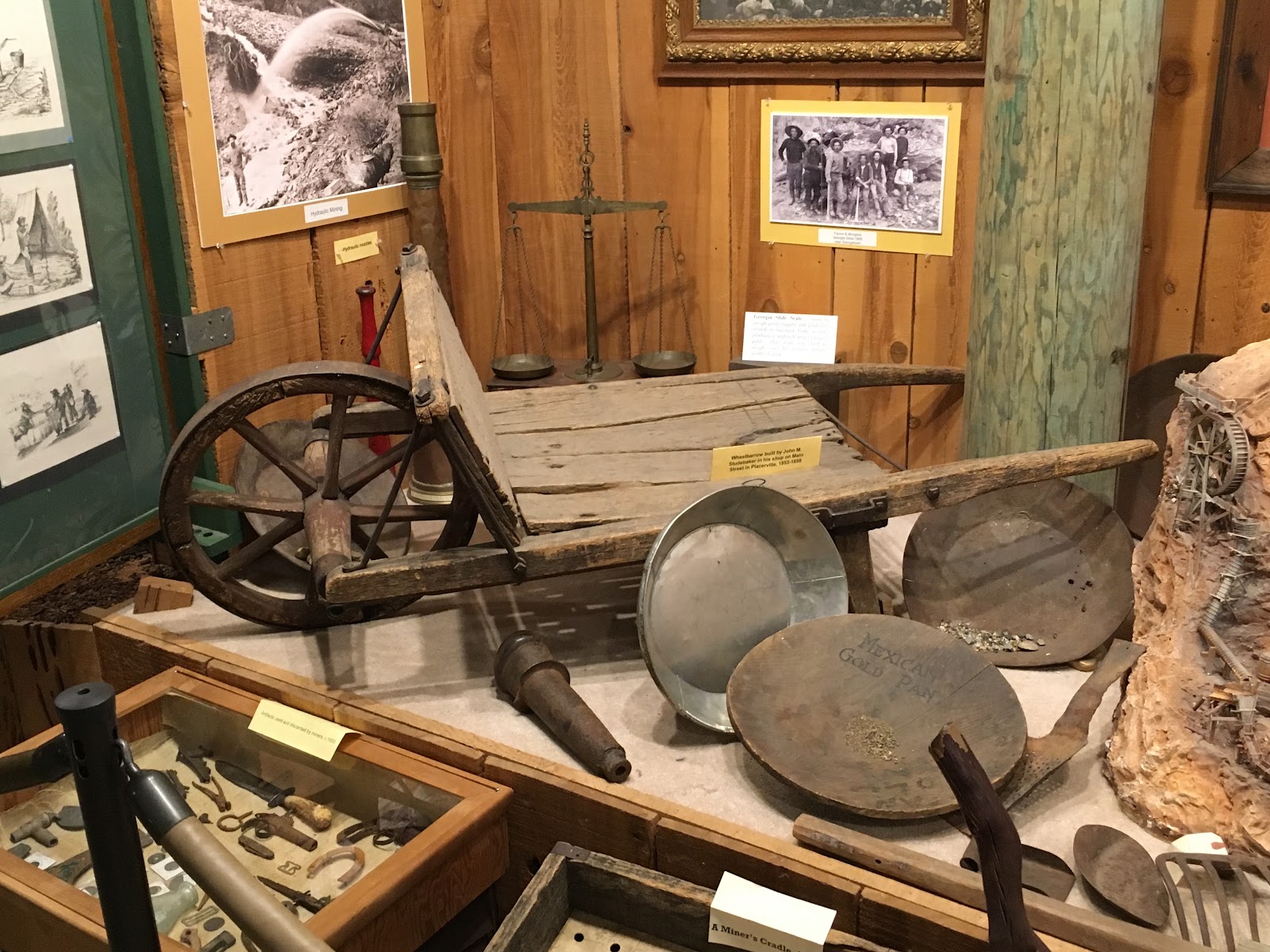
John Mohler decided sometime in 1853 to take a wagon of either his own making or his father's and join a wagon train to the gold fields of California.  John arrived in Placerville on the last day of August 1853.  He went there to search for gold but took a job in a blacksmith's shop at 543 Main Street.  He began a five-year professional relationship with the blacksmith H.L. Hinds.  John worked repairing miners' tools and stagecoaches but soon learned to make wheelbarrows.  John was making ten dollars a wheelbarrow by 1855 and had saved considerable money.    

       
      John Mohler Studebaker's Wheelbarrow, El Dorado County Historical Museum, Courtesy of Stephen Studebaker

There are numerous historical references to John Mohler or "Wheelbarrow Johnny" as he became known.  San Joaquin County Biographies records the biography of a man named David R. Reynolds.  Mr. Reynolds indicates meeting John in 1853 and developing a long-lasting friendship.  The Sacramento Daily Union, 7 February 1854, has an advertisement for unclaimed mail for a Jno M. Studebaker.  A California historical marker commemorating Wheelbarrow Johnny is located in Placerville, and during annual festivities, there are wheelbarrow races to celebrate Johnny.  The Studebaker Family reunions hold wheelbarrow races as well.

Stephen Studebaker with Historical Marker for John Mohler Studebaker, Courtesy of Stephen Studebaker


                        Historical Marker for John Mohler Studebaker, Courtesy of Stephen Studebaker

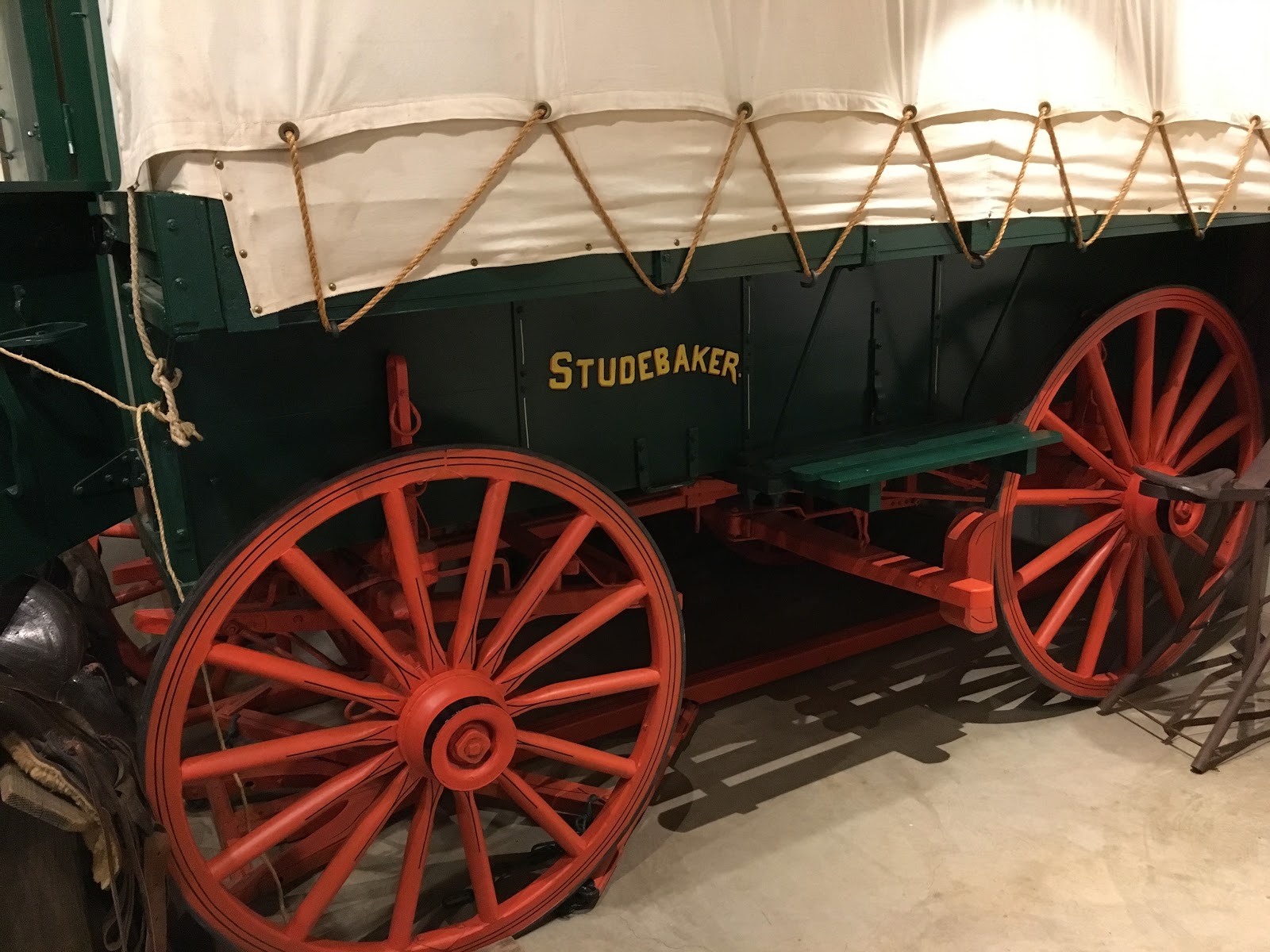
In 1858, John returned east to South Bend, Indiana, where his family now lived.  He came by water through the port of New York.  John saw many heavy wagons and elegant carriages in New York and thought his family wagon-making business might be interested in manufacturing similar vehicles.  When he returned to South Bend, he had $8,000 to invest in the family business, which ultimately became the factory that made wagons and, eventually, the famous Studebaker cars. The Studebakers were one of a handful of wagon makers for the Oregon Trail.


                         Studebaker WagonsEl Dorado County Historical Museum, Courtesy of Stephen Studebaker


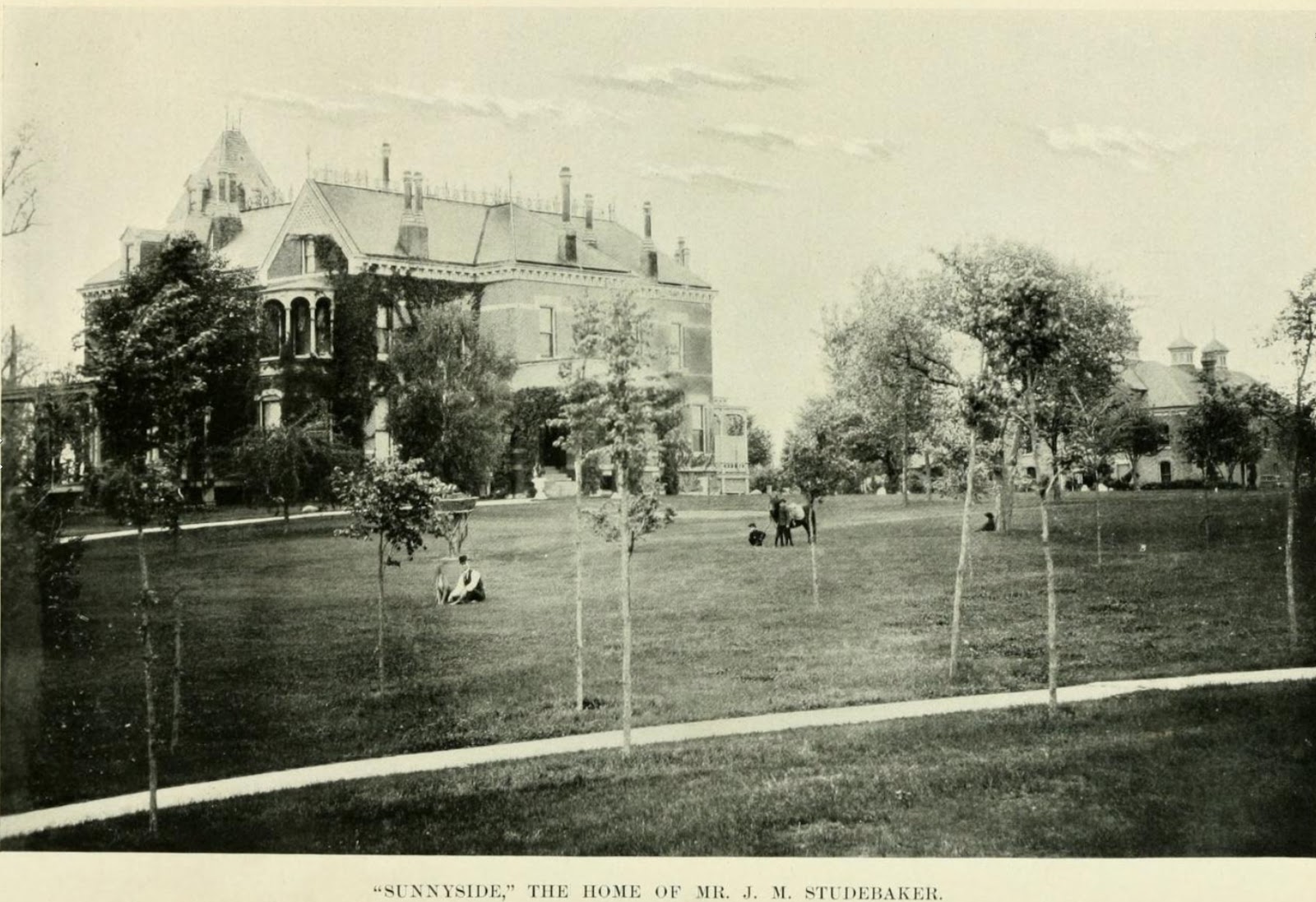
John Mohler Studebaker became the co-founder and president of the Studebaker Corporation.  He built a beautiful home in South Bend, Indiana.  He called the home Sunnyside. 


                                   Sunnyside, J. M. Studebaker home, photo taken in 1901.  Public Domain.


                                      John Mohler Studebaker (seated far right), courtesy of Stephen Studebaker

John Mohler Studebaker is my husband Stephen Studebaker's 3rd cousin, 4x removed.

Tuesday, March 1, 2022

My Husband's Favorite Photo of Grand Canyon


From the Collection of Stephen Studebaker

In June of 1928, Guy Emerson Studebaker, my husband's grandfather, and his wife Ella Mae Funderburg, along with Drue Funderburg, his brother-in-law, and his wife Ethel Forrest Delinger embarked on a train trip to Long Beach for the annual conference of the Church of the Brethren.  Drue was a minister in the church and a professor at Bethany Theological Seminary in Chicago.  

It is unknown if Grandpa Guy had planned his Grand adventure before he left Ohio.  My guess is that he had.  By Jun. 25, Guy was at the Grand Canyon, on the back of a mule, fourth from the top, at the head of the Bright Angel Trail.    He was a farmer, owned mules, and was probably more comfortable with the animals than the other dudes in this photograph.  But of course, what do I know of any of their backgrounds?  

One of the Kolb brothers from the famous Kolb Studio photographed this group at the head of the Bright Angel Trail.  Other families across the country have similar treasured mementos in their homes.  Thousands of these photographs were made, but their survival from this period is remarkable.  My husband's grandmother gave him this photograph because he was a national park ranger at the Kolb Studio and on the Bright Angel Trail.   The Kolb brothers made photographs from this spot for 75 years. 

Kolb Studio.  Public Domain

By 1903, the brothers had gotten permission from the trail owner, Ralph Cameron, to start their photography business.  They took photographs at various locations in and around the canyon.  They would photograph the riders as they set out on their adventures and have the pictures ready for sale by the time they returned to the rim.  They even filmed a motion picture of their 101-day run of the Colorado River.  They built the present studio in 1906.   The studio was saved from Park Service demolition in 1966 when Congress passed a bill to preserve historic Park Service buildings.

                             Pittsburg Post Gazette, Pittsburg, Pennsylvania, Sunday, Oct. 26, 1913, col. 1, page 37

These intrepid riders were guided into the canyon by way of Indian Gardens to the overlook for the inner gorge by wranglers, one who rode in the front and one who rode in the rear of the group.  It was a 13.3-mile round trip ride from the canyon's rim to Plateau Point.  It took approximately 7 hours to go down and back.  Each returning rider was undoubtedly filled with stories of their day's adventure.

                                                                         Indian Gardens.  Public Domain

Guy Studebaker's grandson, Stephen, was a National Park Ranger at the Kolb Studio in 1980.  The Park Service used it as a visitor contact station at the time.  His grandfather would have never guessed that his oldest grandson would someday hike more than 1500 miles in the Grand Canyon and climb 18 towers and buttes below the rim, including two first ascents. 

Saturday, October 26, 2019

Teachers and Preachers

My husband Stephen’s family came from New Jersey, Pennsylvania, and Maryland to Ohio in the first half of the 19th Century.  They settled in Clarke, Miami, and Knox counties.  They farmed the land, preached the gospel, and educated their children.

The first of the Kellers to come west was Jacob, son of Henry, who walked from Pennsylvania to Ohio in 1800, three years before statehood.   He returned from this sojourn in 1806.  While he was there, his father, Henry, came by horseback to Ohio looking for land.

By 1808 the family loaded up and traveled by wagon for a four-week trip to Ohio, settling in Fairfield County.  Over time many family members also moved, including his son Benjamin.  Henry bought 1000 acres of land through the years, later selling some of it to his children.   

When my husband’s family came to Knox County, it was a rugged, wooded wilderness populated with many game animals, dangerous bears, and wolves.  Native Americans hunted and lived in this region.  While clashes occurred between the settlers and native people, many interacted more peacefully.  The forest gave way to farms as the settlers cleared the land, and native people were eventually forcibly removed to Oklahoma territory by the United States government. 
  
Benjamin’s son Henry was born in 1829 in Pike Township, Knox County, possibly near the location of his land.  Henry was a minister overseeing the Owl Creek Church of the Brethren for twenty-five years.  Two maps dated 1871 and 1896 show a school located on the corners of Henry’s land.  It appears that the maps represent two different schools from two different dates.  Note the location of Keller properties in the upper left-hand corner of each map. 


1871 Pike Township,  Knox County, Ohio, Atlas of Knox County, Ohio


1896 Pike Township, Knox County, Ohio, Knox County Atlas

 Henry’s son Daniel was born in Pike Township in 1851.  Family stories have long been shared naming Daniel as a teacher.  He seems to be the first teacher of the Keller family though one might argue that the ministers in the family were teachers of a kind.  Most family members were German Baptist Brethren or Mennonites.  In 1880 Daniel Keller appeared with his first wife Elnora and their first child Walter in the home of his father Henry on the Pike Township, Knox County, Ohio, US Federal Census.  Seeing that the census taker recorded Daniel as a school teacher was exciting.  


1880 United States Census for Daniel Keller, Pike, Knox Ohio

My husband keeps a photo of his great-grandfather Daniel and his second wife, Ardella, in our home on a lovely curly maple table his father made.  Sitting alongside is Daniel’s school handbell, a true family heirloom.  

                                                            Collection of Stephen Studebaker

Another family heirloom is the 1910 student souvenir book given to Daniel’s daughter Lola by her teacher G. S. Strausbaugh.  This wonderful little book had a photograph of the teacher on the cover, inspirational drawings and poems, and Lola’s final report card for the year.  


                                                                 Collection of Stephen Studebaker

Lola, three of her siblings, and other relatives and neighbors were included in the pupil list.  Lola was about fifteen or sixteen when this book was given to her.  Perhaps the children attended one of the schools illustrated on the maps.

                                                            Collection of Stephen Studebaker


Early class photo with G.S. Strausbaugh and Keller children, collection of Stephen Studebaker

Three of Daniel’s six children were educators at some point.  His oldest son Walter was listed as a teacher on the 1910 census.  His sister Chloe had a long career as an educator.  Walter’s half-sister, Lola, is described by her granddaughter Nancy as having been a teacher for a short time before her marriage in 1915.  No record of this exists. 


Early photo of Lola, Walter, Mabel, and Ada, collection of Stephen Studebaker

Chloe started as a public school teacher, recorded in the 1910 census.  She continued in education, probably up to the time of her retirement.  Chloe completed three years of college and served as a principal in Lorain, a city in northern Ohio, on Lake Erie.  The first record of her in this position is in the 1920 census.  Chloe lived and worked here when a terrible tornado hit Lorain in 1924.  78 lives were lost, 500 homes were destroyed, and 7000 were homeless. 

Years of successive city directories show her as a principal at Brownell Elementary School, the final record in 1937.  She declared herself retired on the 1940 census in Pinellas County, Florida.    


Aerial view looking north, 1908-1918, Lorain, Ohio.  Wikimedia Commons

Ultimately Daniel Keller’s granddaughter Ruth met Eldon, a young man who attended Manchester College, their church school in Indiana.  When her beau graduated from college, he found a job teaching vocational agriculture at Dixon Township High School in Preble County, Ohio.  We think he took this job because it was close to Ruth, who was studying at the Indiana Institute of Art.  When Ruth graduated, she stayed at her alma mater as an instructor.  In later years, Eldon was a Sunday school teacher and deacon in the New Carlisle Church of the Brethren.  


 Eldon Studebaker and Ruth Workman Studebaker, collection of Stephen Studebaker

Three of Ruth and Eldon’s four children became involved in education.  Nancy taught German and was a high school librarian for many years.  Dan served on his hometown school board for twenty-four years.  Stephen was a teacher for 35 years.  Twenty-three of those years were spent teaching on the Navajo Reservation in Arizona.  Steve’s daughter, Stephanie, has worked in education in many capacities.  Ted found another path,  working with people as a counselor.


Tuesday, January 23, 2018

Guess Which Ancestor is Coming to Dinner?


Elizabeth Steele's great-grandson Isaac Studebaker

What a wonder it would be to dine with Elizabeth Steele Studebaker, my husband’s 3rd great-grandmother.  Elizabeth Steele continues to live through the name she has passed down to her heirs, with all six of her sons carrying her maiden name as their middle name.  Her story is discussed and speculated around the tables of many of her descendants. It conjures up tales of longing and independence on the frontier.
Elizabeth was born in Bedford County, Pennsylvania, in 1793.  Her husband, Abraham Studebaker, was born there as well.  She must have known him growing up in the same County.  He left for Miami County, Ohio, when he was only 15 years old, taking out land patents there in 1805.  It appears that he went back to Pennsylvania to marry Elizabeth in 1813. Abraham then returned to the Ohio frontier by horseback with his new bride.
The country was still wild and untamed when they came.  The troubles with Tecumseh were fresh in the minds of the settlers.  Living with relatives when they first arrived, they finally moved to their own land sometime after 1814.  Her husband built a log cabin where she raised her family of eleven children. This cabin was often used for services of the German Baptist Brethren Church, to which they belonged.  Six years after she died in 1842, he built a large brick home for his children and his new wife. 

The new wife's house

Stories are told that she must have been very lonely, living so far from her family in Bedford County, Pennsylvania.  Her niece recalled her returning to Pennsylvania alone, by horseback.  This trip would have taken more than twenty days. She left the children at home, the oldest ones, to care for the younger ones.  One story suggested her trip might have occurred in 1836 after the last child was two years old.  She is said to have stayed with her family for several months, leaving her husband and neighbors to wonder if she would return.
So many questions arise from this story.  What was her trip like? What route did she take? Did she have any of the children with her? Was she scared? Why did she stay so long?  Yes, she would be a fascinating dinner guest.   
Elizabeth's 3rd great-grandson Stephen, at their graves


First photograph from The Studebaker Family in America, 1736-1976, v. 1, by Carlock, Faust & Miller, p.188.  Second photograph from The Studebaker Family in America, 1736-1976, v. 1, by Carlock, Faust & Miller, p.57. Third photograph with permission of the photographer's son, Stephen Studebaker.