Showing posts with label Church of the Brethren. Show all posts

Friday, October 27, 2023

Ohio County Agent Becomes a Naval Officer on a Liberty Ship During WW II


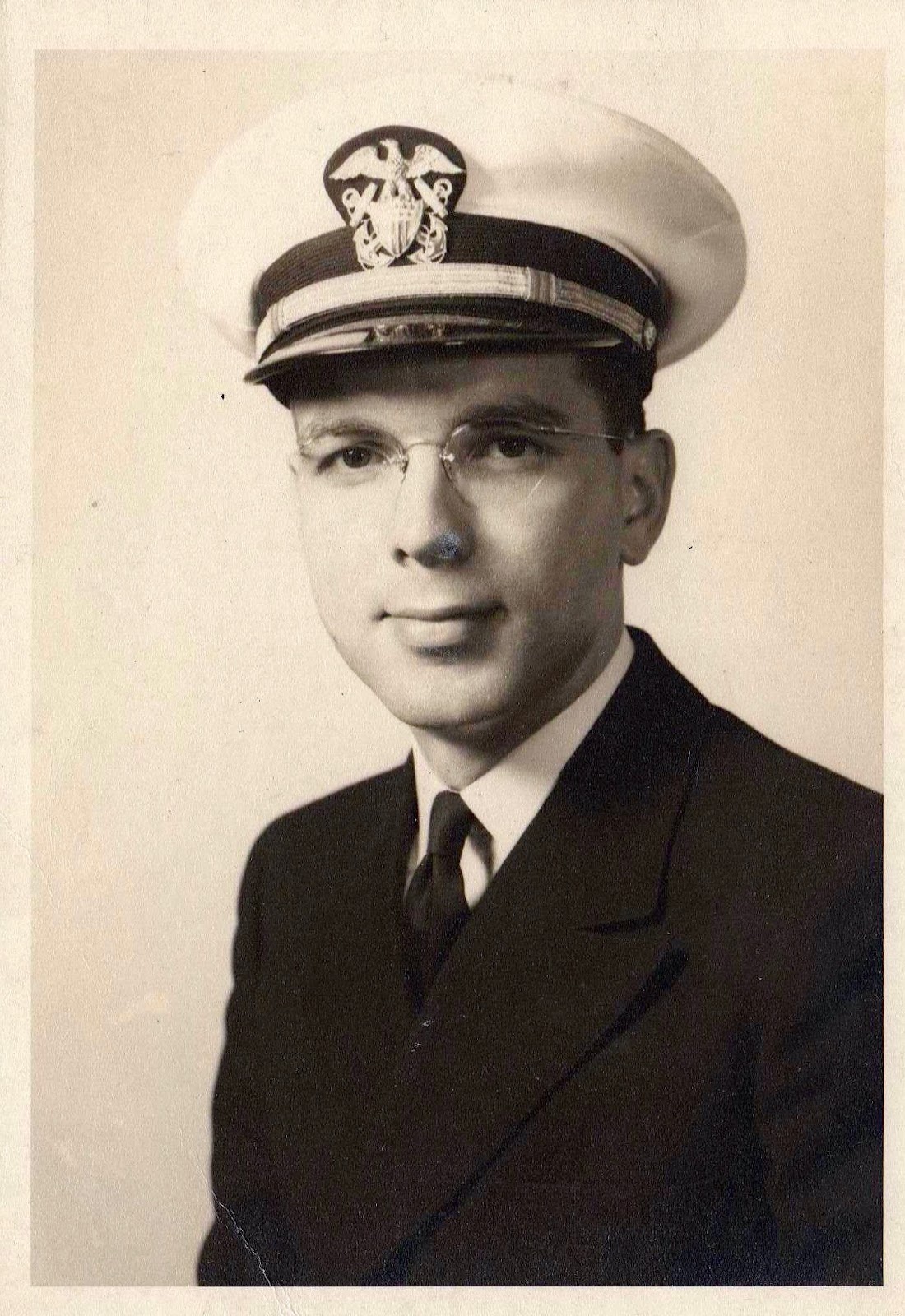
                                                                Eldon F. Studebaker, courtesy of Stephen Studebaker

Eldon E. Studebaker, a young Church of the Brethren member, watched as his friends signed up to fight in WWII.  The members of this church had a long history of being pacifists, but for some, this war was different.  After what I am sure was a great deal of soul searching, Eldon signed up for the Navy in May 1944.  He had completed his education in agriculture at Manchester College and Ohio State University.   Because he already had a degree, the military sent him to Princeton and later to the Armed Guard Training School in Norfolk, Virginia, for further training.  His college education and military training allowed him to obtain the rank of Ensign quickly.

Newspapers.com, The Journal Herald, Dayton, Ohio, 4 Mar 1945, Page 10

The Navy assigned him to the liberty ship, S.S. Harold T. Andrews.  He commanded a twenty-four-man armed guard aboard the Andrews, where most of the crew were civilians.  Liberty ships served various purposes in the war, including carrying food, fuel, vehicles, and aircraft.  Some were used as troop carriers or for transporting prisoners of war.  The Navy used some of these vessels as hospital ships.  Eldon’s ship was carrying Coca-Cola syrup, uniforms, and Studebaker trucks.


                             Liberty Ship Harold T. Andrews, photo taken by Eldon F. Studebaker, courtesy of Stephen Studebaker


Their ship left Rhode Island and crossed to the Pacific through the Panama Canal, heading for Manu, just north of Papua, New Guinea.  Manu had been a hotly contested island, finally liberated from the Japanese by the Americans and Australians in February 1944.  The island was significant to the United States because they used it as a supply hub for shipping items to many other conflict areas.

Map of Manu and  Seeadler Bay, Wikipedia

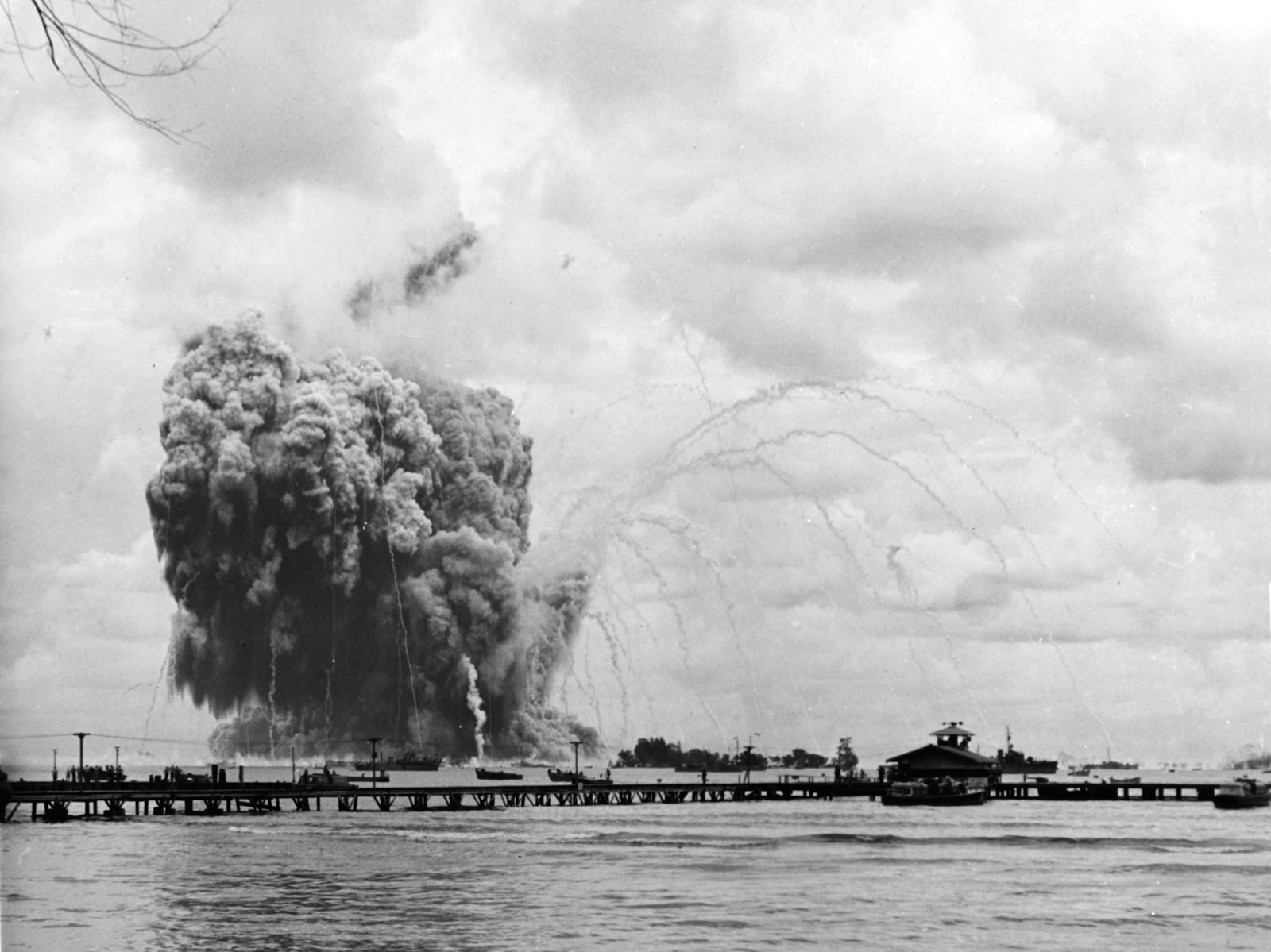
After a harrowing journey across the Pacific, Eldon arrived at what he called Manu Bay (probably Seeadler Harbor) in Dec 1944.  He photographed his ship in the harbor on December 25, 1944.  Luckily, he avoided the terrible explosion of the U.S.S. Mt. Hood one month earlier in the same harbor.  The Mt. Hood carried ammunition when she went up, killing many sailors on board and sinking seven smaller nearby vessels.

                                                                The Explosion of the U.S.S. Mt Hood, Wikimedia

The days must have seemed long for the men who spent weeks at sea.  Many of the men gambled, but Eldon did not join in.  He noted that when the ship got to Manu, a couple of the card sharks had the rest of the crew’s money.  Eldon spent time reading his prayer book, keeping a journal, and making sketches in the margins of the small book.  He wrote many letters home to his beloved Ruthy and his small daughter Nancy.  Eldon was a farm boy, learning to carve with a pocket knife as a child.  While at sea, he carved things that he saw, including a native outrigger he had photographed from the deck of his ship.  This treasure is in the collection of his son Stephen, who was born during the war.


Photo of an Outrigger Canoe by Eldon F. Studebaker, courtesy of Stephen Studebaker

Back of the Outrigger Canoe photo, courtesy of the author

               Carvin g of an Outrigger Canoe carved by Eldon F. Studebaker, courtesy of the author


Originally published in Generations, the newsletter of the Southwest Colorado Genealogical Society.


Tuesday, March 1, 2022

My Husband's Favorite Photo of Grand Canyon


From the Collection of Stephen Studebaker

In June of 1928, Guy Emerson Studebaker, my husband's grandfather, and his wife Ella Mae Funderburg, along with Drue Funderburg, his brother-in-law, and his wife Ethel Forrest Delinger embarked on a train trip to Long Beach for the annual conference of the Church of the Brethren.  Drue was a minister in the church and a professor at Bethany Theological Seminary in Chicago.  

It is unknown if Grandpa Guy had planned his Grand adventure before he left Ohio.  My guess is that he had.  By Jun. 25, Guy was at the Grand Canyon, on the back of a mule, fourth from the top, at the head of the Bright Angel Trail.    He was a farmer, owned mules, and was probably more comfortable with the animals than the other dudes in this photograph.  But of course, what do I know of any of their backgrounds?  

One of the Kolb brothers from the famous Kolb Studio photographed this group at the head of the Bright Angel Trail.  Other families across the country have similar treasured mementos in their homes.  Thousands of these photographs were made, but their survival from this period is remarkable.  My husband's grandmother gave him this photograph because he was a national park ranger at the Kolb Studio and on the Bright Angel Trail.   The Kolb brothers made photographs from this spot for 75 years. 

Kolb Studio.  Public Domain

By 1903, the brothers had gotten permission from the trail owner, Ralph Cameron, to start their photography business.  They took photographs at various locations in and around the canyon.  They would photograph the riders as they set out on their adventures and have the pictures ready for sale by the time they returned to the rim.  They even filmed a motion picture of their 101-day run of the Colorado River.  They built the present studio in 1906.   The studio was saved from Park Service demolition in 1966 when Congress passed a bill to preserve historic Park Service buildings.

                             Pittsburg Post Gazette, Pittsburg, Pennsylvania, Sunday, Oct. 26, 1913, col. 1, page 37

These intrepid riders were guided into the canyon by way of Indian Gardens to the overlook for the inner gorge by wranglers, one who rode in the front and one who rode in the rear of the group.  It was a 13.3-mile round trip ride from the canyon's rim to Plateau Point.  It took approximately 7 hours to go down and back.  Each returning rider was undoubtedly filled with stories of their day's adventure.

                                                                         Indian Gardens.  Public Domain

Guy Studebaker's grandson, Stephen, was a National Park Ranger at the Kolb Studio in 1980.  The Park Service used it as a visitor contact station at the time.  His grandfather would have never guessed that his oldest grandson would someday hike more than 1500 miles in the Grand Canyon and climb 18 towers and buttes below the rim, including two first ascents.